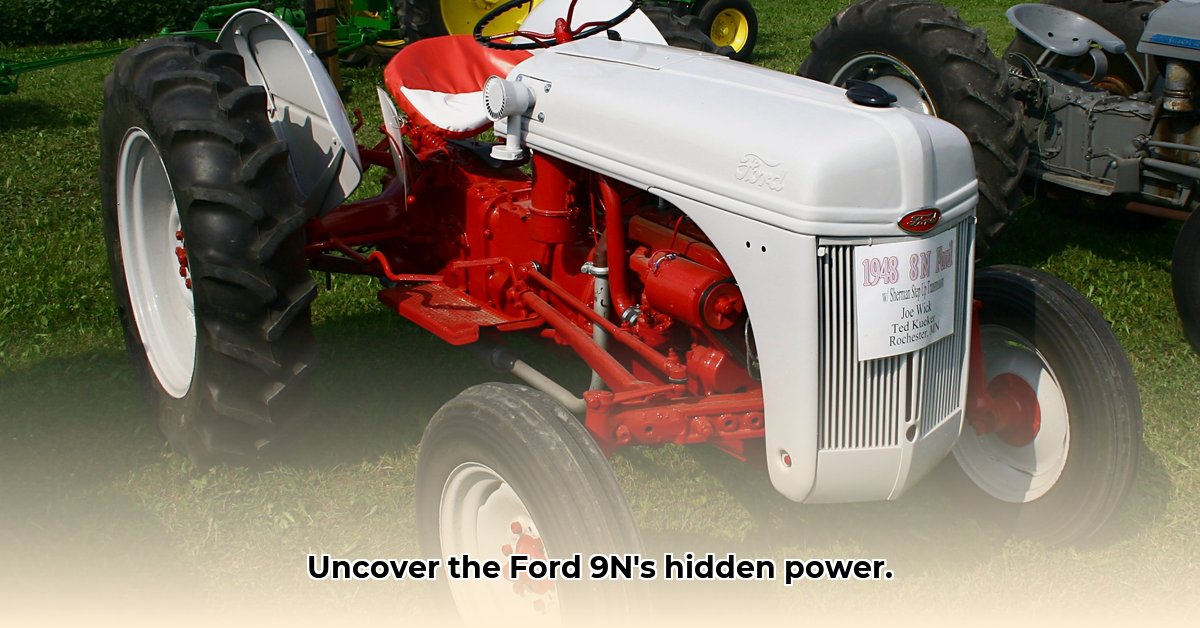
Ford 9N Tractor Specifications: A Deep Dive
The Ford 9N tractor, a true icon of agricultural history, deserves more than a cursory glance. This guide delves into its specifications, historical significance, and its place within the broader context of 20th-century farming. We'll explore its technical details, comparing it to contemporaries and addressing inconsistencies found in various sources. For more information on serial numbers, check out this helpful resource: Ford Tractor Serial Numbers.
Engine Power and Fuel Options: The Heart of the Matter
The Ford 9N boasted a 2.0-liter, four-cylinder gasoline engine – a remarkable feat of engineering for its time. Interestingly, it could also run on distillate fuel, a practical adaptation reflecting the fuel availability challenges faced by farmers during the era. However, precise horsepower figures remain elusive, varying across sources depending on whether the measure is drawbar horsepower (for pulling) or PTO (power take-off) horsepower (for powering implements). This variance highlights the challenges in comparing measurements across different eras and methodologies. Further research is needed to definitively quantify its power output. Was it a workhorse, or more of a sturdy mule? The answer isn't simply a number.
Transmission and Drivetrain: Smooth Operations
The 9N featured a straightforward three-speed manual transmission. While simple, this design proved exceptionally reliable and well-suited to the demands of agricultural work. Its robustness mirrored the overall design philosophy of the tractor; practicality and longevity over flashy features. This simplicity, a common trait of the machinery of this era, provided unparalleled dependability.
Dimensions and Weight: A Physical Profile
The 9N's weight ranged from approximately 2140 to 2900 pounds, a significant variation largely attributable to the addition of optional equipment reflecting the customization farmers often implemented. This versatility, adapting to specific farming needs and soil conditions, speaks volumes about the design's adaptability. However, precise dimensions (length, width, height, and ground clearance) remain to be determined in order to provide a complete physical profile of the tractor.
A Historical Context: Mechanizing the American Farm
Introduced near the end of the Great Depression, the Ford 9N's comparatively affordable price of roughly $585 (in 1939 dollars) revolutionized farming. It brought mechanization within reach of small farmers who previously relied on animal power, significantly boosting agricultural productivity across the nation. How many small farms in the Great Depression would have been viable without the Ford 9N? The answer, surely, is demonstrably fewer and reflects its immense historical importance.
Comparing the 9N to its Rivals: The Competitive Landscape
A comparative analysis with other tractors of the late 1930s and early 1940s is crucial for a comprehensive understanding of the 9N's position within the agricultural machinery market. Comparing its fuel efficiency and power-to-weight ratio with competitors will illuminate the 9N's strengths and design innovations. What differentiated the 9N from the competition? Was it price? Reliability? Both? This needs further exploration.
Addressing Data Inconsistencies: Navigating Historical Records
Variations in production start dates and horsepower figures across different sources highlight the challenges inherent in researching older machinery. These discrepancies likely stem from differing measurement techniques and reporting standards of the era. Further investigation into original documents is required to reconcile these differences. Even today the task of validating information from this period is challenging.
The 545 Rear PTO: A Detail Requiring Further Study
The 545 (1.125) rear power take-off (PTO) specification requires further investigation to establish its exact characteristics. The paucity of readily available information underlines the need for deeper research into less-documented aspects of the Ford 9N.
Engine Specifications: Under the Hood
The lack of detailed engine specifications (bore, stroke, and compression ratio) represents a gap in our current understanding. Obtaining this data will allow for a more in-depth comparison with contemporary engines, providing a more complete picture of the 9N's engine design. This level of detail is vital for any truly comprehensive profile.
How to Restore a Ford 9N Tractor Engine
Key Takeaways:
- Restoring a Ford 9N engine is a challenging but rewarding project.
- Costs vary widely, depending on the level of DIY involvement and the engine's condition.
- The decision to rebuild or replace hinges on a combination of financial constraints and sentimental value.
- Careful planning, meticulous attention to detail, and high-quality parts are essential for success.
- Online forums and resources provide invaluable assistance during the process.
Engine Assessment: Before You Begin
Before embarking on a Ford 9N engine restoration, thorough assessment is paramount. A compression test will identify potential problems that will ultimately dictate the scope and costs of the project. A meticulous assessment helps avoid unnecessary expenses and wasted time.
Steps in Restoring Your Ford 9N Engine
The restoration process is detailed and requires significant mechanical aptitude:
Disassembly: Carefully disassemble the engine, meticulously labeling and organizing components. Photography is crucial.
Inspection and Parts Sourcing: Thoroughly inspect each component, sourcing high-quality replacement parts from reputable suppliers.
Machine Shop Work (if needed): Tasks like crankshaft grinding, cylinder boring, and head surfacing are typically best left to professionals with specialized equipment.
Reassembly: Reassemble the engine, following precise torque specifications and referencing a comprehensive workshop manual.
Testing and Break-in: Test the engine thoroughly, following a crucial break-in period to ensure optimal longevity.
Cost Analysis: Weighing Your Options
The cost of restoring a Ford 9N engine ranges significantly:
| Approach | Cost Range | Pros | Cons |
|---|---|---|---|
| DIY | $1000 - $2000 | Potentially cost-effective, personally rewarding | Requires extensive mechanical skills and time |
| Professional | $2000 - $4000+ | Expertise, warranty, faster turnaround time | Significantly higher initial cost |
Carefully evaluate your own expertise and time constraints before making a decision.
Rebuild or Replace? A Critical Decision
Replacing the engine may be more economical than a complete overhaul, particularly for tractors in poor overall condition. However, the sentimental value of retaining the original engine should be considered.
Table of Key Specifications (Preliminary):
| Specification | Value | Notes |
|---|---|---|
| Engine | 2.0L, 4-cylinder | Gasoline or distillate fuel; Precise specifications (bore, stroke, compression ratio) require further research. |
| Transmission | 3-speed | Manual; gear ratios need further confirmation. |
| Weight | 2140-2900 lbs | Varies depending on optional equipment. |
| Production Years | 1939-1942 (start date disputed) | Approximately 100,000 units produced; precise figures require verification. |
| Price (1939) | $585 | This low price was a key factor in its widespread adoption. |
| Rear PTO Type | 545 (1.125) – Requires Further Research | More detailed specifications are needed. |
This guide represents a preliminary exploration of the Ford 9N tractor. Further research is essential to fill the gaps in our current knowledge and provide a truly comprehensive understanding of this iconic machine.